
Plant Information
Common Name: Neroli, Orange Blossom
Scientific Name: Citrus aurantium (bitter orange tree)
Family: Rutaceae (Citrus family)
Plant Type: Evergreen flowering tree
Key Compound: Linalool, linalyl acetate, nerolidol, limonene
Origin: Southeast Asia; widely cultivated in the Mediterranean
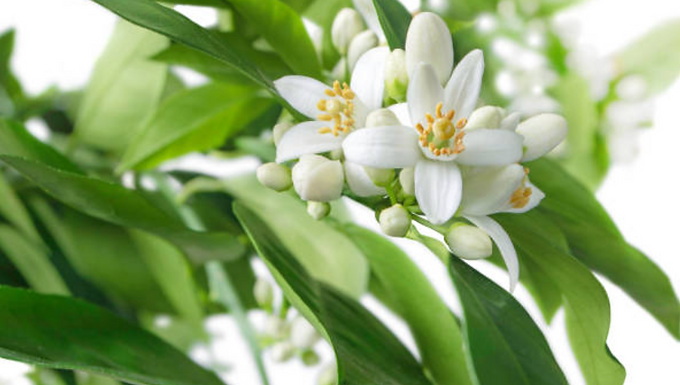
Appearance: Medium-sized tree with glossy green leaves, fragrant white blossoms, and small bitter orange fruits
About the Plant
Neroli refers to the essential oil extracted from the blossoms of the bitter orange tree (Citrus aurantium). The oil is obtained through steam distillation of fresh orange blossoms and is prized for its delicate floral aroma and therapeutic properties.
Neroli has been used for centuries in perfumery, skincare, and aromatherapy, often associated with luxury and high-end formulations due to its complex scent and labor-intensive production.
How does this plant grows?
The bitter orange tree thrives in warm subtropical climates.
Seed or graft propagation – trees are commonly grafted.
Leaf development – glossy evergreen leaves form.
Flowering stage – fragrant white blossoms bloom in spring.
Harvest stage – blossoms are carefully picked for essential oil extraction.
Neroli oil production requires large quantities of flowers, making it a precious ingredient.
Skin Care Benefits
Neroli essential oil is widely used in skincare for its balancing and soothing properties.
Skin Balancing
Helps regulate oil production, making it suitable for both dry and oily skin.
Skin Regeneration Support
May support the appearance of smoother, more even skin.
Antioxidant Protection
Contains compounds that help protect the skin from environmental stress.
Soothing and Calming
Helps calm irritated or sensitive skin.
Aromatherapeutic Benefits
Its floral scent promotes relaxation and emotional well-being.
Neroli is commonly used in:
facial oils
serums
toners
creams
perfumes
Reasons People Use Neroli in Skincare
Neroli is valued in cosmetic formulations because it:
• Provides a luxurious natural fragrance
• Helps balance the skin
• Supports skin rejuvenation
• Contains antioxidant compounds
• Enhances the sensory experience of products
It is especially popular in premium skincare and aromatherapy formulations.
Clinical Findings
Scientific research on neroli and its components suggests several benefits.
Antioxidant Activity
Compounds such as linalool may help protect skin cells from oxidative stress.
Antimicrobial Effects
Neroli oil has shown activity against certain bacteria.
Skin Conditioning
Studies suggest essential oils like neroli may improve skin appearance and comfort.
Stress Reduction
Aromatherapy studies indicate neroli may help reduce stress and promote relaxation.
The Science
Neroli essential oil contains a complex mixture of volatile compounds.
Major components include
• Linalool
• Linalyl acetate
• Nerolidol
• Limonene
These compounds contribute to:
antioxidant activity
antimicrobial properties
calming effects
fragrance profile
The oil is produced by steam distillation of orange blossoms, preserving its delicate aromatic compounds.
Ancient Medicine Usage
Neroli and orange blossoms have been used historically in traditional practices.
Mediterranean Herbal Medicine
Orange blossoms were used in calming remedies and skin preparations.
Traditional Middle Eastern Practices
Floral waters (orange blossom water) were used for skincare and wellness.
European Herbal Traditions
Neroli became popular in perfumery and therapeutic applications.
The name “neroli” is believed to originate from an Italian princess who popularized its use in the 17th century.
Symbolism of this Plant
Neroli and orange blossoms carry rich symbolic meaning.
Purity and innocence - Orange blossoms are often used in wedding traditions.
Love and beauty - Associated with romance and elegance.
Calm and renewal - The scent symbolizes peace and emotional balance.
References
Information based on research and publications from:
Journal of Essential Oil Research – Neroli oil composition
International Journal of Cosmetic Science – Essential oils in skincare
USDA Plant Database – Citrus aurantium
Handbook of Essential Oils: Science, Technology, and Applications
Herbal Medicine: Biomolecular and Clinical Aspects