
Skincare
Skincare

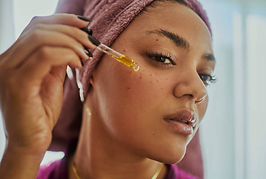



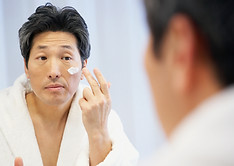

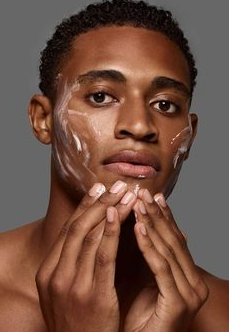

These general skin care tips from dermatologists can benefit just about everyone.
-
Apply sunscreen every day before you go outdoors. Sunscreen is the closest thing we have to a fountain of youth. It really can slow down skin aging. It can also help prevent skin cancer. Look for a sunscreen that offers broad-spectrum protection, SPF 30 (or higher), and water resistance.
While it's important to protect infants' skin from the sun, the AAD recommends applying sunscreen ONLY to children who are 6 months and older.

2. Don't smoke. Smoking speeds up how quickly your skin ages. If you smoke, your wounds will also take longer to heal.
and research shows that smoking worsens some skin diseases, including psoriasis and hidradenitis suppurativa.
3. Check your skin for skin cancer. Skin self-exams can help you find skin cancer early when it's highly treatable. If
you notice a spot that differs from the others, or one that changes, itches, or bleeds, make an appointment to see a
dermatologist.
4. Use a self-tanner if you like looking tanned. Anytime you tan
indoors or outside, you prematurely age your skin. You also increase your
risk of getting skin cancer. A self-tanner can give you the look you want
without the risks. To keep your skin healthy, you want to protect it from
the sun even when using a self-tanner.
5. Use skin care products that match your skin's needs. What's
your skin type — oily, dry, normal, combination, or sensitive? Do you have
a skin condition? Using products formulated for your skin's needs will
help your skin look and feel its best.

6. Resist the urge to scrub your skin clean. If you've been sweating heavily or have a serious acne flare, it may seem
natural to scrub your skin. Don't! Scrubbing irritates your skin, which can worsen any skin condition, including acne.
7. Wash your face when waking, before bed, and after sweating. Washing when you wake up removes the dirt and
bacteria that settle on your face while sleeping. Before bed, you want to remove makeup and grime, such as smog,
smoke, or dirt, which may have landed on your skin.
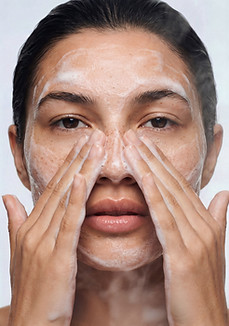
8. Gently wash your face. Gentle cleansing helps skin look its best.
To gently cleanse your face, wet it with warm water. Then apply a mild
cleanser, gently applying the cleanser in a circular motion with your
fingertips. Finish by completely rinsing off the cleanser and gently patting
your face dry with a clean towel.
9. Stress less. Finding healthy ways to manage stress can help your skin,
too. Some skin diseases like psoriasis and atopic dermatitis (eczema)
often appear for the first time when someone feels really stressed. Stress
can also cause flare-ups of many skin conditions, including acne, eczema,
psoriasis, and rosacea.

10. See a board-certified dermatologist if you dislike something about your skin. When it comes to our
skin, dermatologists are the experts. These doctors diagnose and treat thousands of different skin diseases. They also
have the expertise needed to help people safely rejuvenate and care for their skin.
References
-
Alikhan A, Lynch PJ, et al. "Hidradenitis suppurativa: A comprehensive review." J Am Acad Dermatol 2009;60(4):539-61.
-
Chien AL, Qi J, et al. “Perioral wrinkles are associated with female gender, aging, and smoking: Development of a gender-specific photonumeric scale.” J Am Acad Dermatol. 2016;74:924-30.
-
Van de Kerkhof PCM and Schlkwijk J. (2008) “Psoriasis.” In: Bolognia JL, Jorizzo JL, et al. editors. Dermatology, 2nd ed. Spain, Mosby Elsevier: p. 115.
Last updated: 10/29/24
How Can You identify your skin type?
How Can You identify your skin type?
You can easily test your skin type at home by observing your skin. Follow these simple steps to identify your skin type:
-
Wash your face with a gentle cleanser and gently pat dry.
-
Avoid touching your face for an hour.
-
After an hour, dab your T-zone with a blotting sheet or a tissue.
1. If your skin feels completely fine - not tight and not greasy _ Your skin type is: Normal / Balanced
2. If your skin looks shiny everywhere and feels slick _ Your skin type is: Oily
3. If your skin looks shiny on the T-zone, but nowhere else _ Your skin type is: Combination
4. If your skin looks red, inflamed, or otherwise angry and upset _ Your skin type is: Sensitive
5. If your skin looks flakey or feels tight _ Your skin type is: Dry
Now, examine the tissue and your face for the following signs:
-
Normal skin (or Balance Skin): There are no flakes or grease on the sheet, and no redness or irritation.
Common traits: Balanced skin is that happy medium — neither too dry, nor too oily. It never really feels tight or greasy,
and it rarely breaks out. It sounds like a unicorn, but this skin type does truly exist and shouldn’t be taken for granted.
-
Oily skin: The tissue is greasy, and the face looks shiny. Pores may also appear enlarged or inflamed.
Common traits: This skin type makes a lot of sebum around the clock, so it’s frequently shiny and also more likely to develop
acne and visible pores. On the bright side, it’s also less inclined to show wrinkles.
-
Combination skin: The tissue is greasy, and your T-zone looks shiny. Other areas of the face are flaky and dry.
Common traits: When thinking of this type of skin (a blend of both dry and oily), the T-zone immediately comes to mind.
Think greasy forehead, nose, and chin, and cheeks that can be flaky and dehydrated.
-
Sensitive skin: The tissue may or may not be greasy, and the skin looks irritated and red.
Common traits: Easily irritated, this is the type of skin that reacts to everything, whether it’s the fragrance in your face cream
or the pollen in the air. It can also overlay any of the previously mentioned four types, meaning your skin could be both dry and
sensitive or dry and oily, and so on.
-
Dry skin: There is no grease on the tissue, but your skin is flaky, tight, or rough.
Common traits: When skin produces less oil on its own, the result is a flaky, dehydrated texture. Because oil production
naturally slows with age, older adults tend to have drier skin. But the condition can happen at any age. Dry skin is also less
supple than balanced or oily types, so it can become irritated and is also more likely to show fine lines and wrinkles. (Picture
the cracks on a desert floor versus their appearance after a hard rain.)

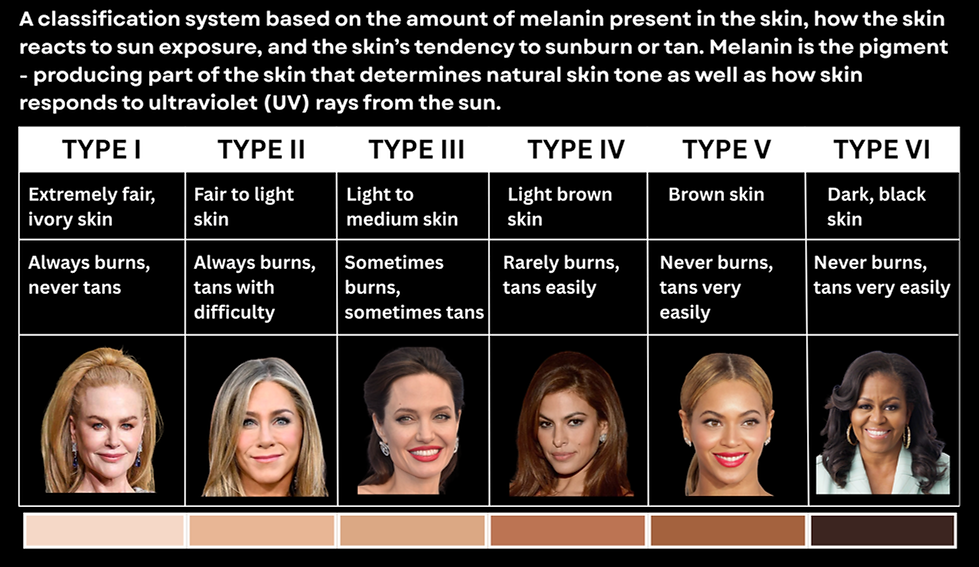
Fitzpatrick Scale
.png)