
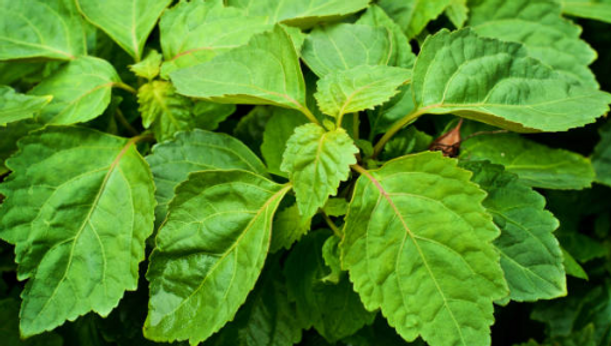
Plant Information
Common Name: Patchouli
Scientific Name: Pogostemon cablin
Family: Lamiaceae (Mint family)
Plant Type: Perennial tropical herb
Key Compound: Patchoulol, α-bulnesene, α-guaiene, sesquiterpenes
Origin: Southeast Asia (Indonesia, Philippines, Malaysia)
Appearance: Bushy herb with broad, soft green leaves, square stems, and small pale purple or white flowers
About the Plant
Patchouli (Pogostemon cablin) is a fragrant tropical herb widely known for its rich, earthy scent. The essential oil is extracted from the dried leaves and is a key ingredient in perfumes, skincare, and aromatherapy.
Patchouli oil has been used for centuries in traditional medicine and textile preservation, and it became especially popular in perfumery due to its deep, long-lasting aroma.
In skincare, patchouli is valued for its soothing, balancing, and skin-conditioning properties.
How the Plant Grows
Patchouli grows best in warm, humid tropical climates.
Propagation – typically grown from cuttings rather than seeds.
Leaf development – lush green leaves grow on soft stems.
Maturation – plants develop aromatic compounds in leaves.
Harvest stage – leaves are harvested, dried, and distilled to produce oil.
Patchouli requires consistent humidity and warmth for optimal growth.
Skin Care Benefits
Patchouli oil is used in skincare for its grounding and skin-supporting properties.
Skin Balancing
Helps regulate oil production, suitable for both dry and oily skin types.
Soothing Properties
May help calm irritated or inflamed skin.
Skin Regeneration Support
Traditionally used to support the appearance of smoother skin.
Antioxidant Effects
Contains compounds that may help protect skin from environmental stress.
Antimicrobial Activity
Patchouli oil may help reduce certain bacteria on the skin.
Patchouli is commonly used in:
facial oils
creams and lotions
soaps
perfumes
aromatherapy products
Reasons People Use Patchouli in Skincare
Patchouli is valued in cosmetic formulations because it:
• Provides a rich, long-lasting natural fragrance
• Helps balance the skin
• Supports skin conditioning and comfort
• Contains natural antioxidant compounds
• Enhances the sensory experience of products
It is especially popular in natural, earthy, and aromatherapy-based skincare products.
Clinical Findings
Research on patchouli oil suggests several beneficial properties.
Anti-Inflammatory Activity
Patchouli compounds may help reduce inflammation.
Antimicrobial Effects
Studies show activity against certain bacteria and fungi.
Antioxidant Properties
Patchouli contains compounds that help neutralize free radicals.
Skin Healing Support
Some studies suggest patchouli may support tissue repair and skin regeneration.
The Science
Patchouli oil is rich in sesquiterpenes, which contribute to its effects.
Major components include
• Patchoulol (patchouli alcohol)
• α-bulnesene
• α-guaiene
• Other sesquiterpenes
These compounds contribute to:
anti-inflammatory properties
antimicrobial activity
antioxidant effects
long-lasting fragrance
Patchouli oil is produced through steam distillation of dried leaves, which enhances its aromatic profile.
Ancient Medicine Usage
Patchouli has been used for centuries in traditional practices.
Traditional Asian Medicine
Used to treat skin conditions and support overall wellness.
Chinese Herbal Medicine
Patchouli leaves were used in remedies for inflammation and infections.
Textile Preservation
Patchouli leaves were historically used to protect fabrics from insects, especially in trade.
Its strong scent made it a valuable component in traditional healing and preservation practices.
Symbolism of this Plant
Patchouli carries symbolic meaning in many cultures.
Earthiness and grounding - Represents connection to nature and stability
Spiritual balance - Used in rituals and meditation practices
Luxury and mystery - Historically associated with exotic trade goods
References
Information based on research and publications from:
Journal of Essential Oil Research – Patchouli oil composition
International Journal of Cosmetic Science – Essential oils in skincare
USDA Plant Database – Pogostemon cablin
Handbook of Essential Oils: Science, Technology, and Applications
Herbal Medicine: Biomolecular and Clinical Aspects