
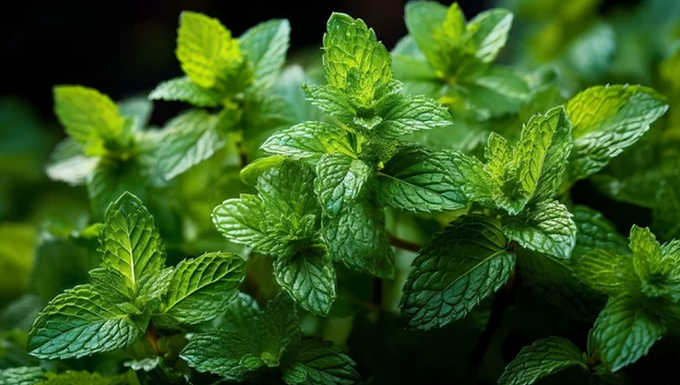
Plant Information
Common Name: Peppermint
Scientific Name: Mentha × piperita
Family: Lamiaceae (Mint family)
Plant Type: Perennial aromatic herb
Key Compound: Menthol, menthone, menthyl acetate, flavonoids, antioxidants
Origin: Europe and the Middle East
Appearance: Green herb with square stems, serrated leaves, and small purple or white flowers
About the Plant
Peppermint (Mentha × piperita) is a hybrid plant created from the natural cross between watermint and spearmint. It is widely cultivated for its strong, refreshing aroma and cooling properties.
Peppermint leaves contain essential oils rich in menthol, which gives the plant its characteristic cooling sensation and fragrance.
Because of these properties, peppermint is widely used in skincare, aromatherapy, personal care products, and herbal medicine.
How does this plant grows?
Peppermint is a fast-growing herb that thrives in moist environments.
Root establishment – peppermint spreads through underground stems called rhizomes.
Leaf development – green leaves and square stems grow quickly.
Flowering stage – small purple or white flowers bloom.
Harvest stage – leaves are harvested for essential oil extraction.
Peppermint spreads easily and is often grown in gardens or cultivated fields.
Skin Care Benefits
Peppermint is commonly used in skincare for its refreshing and stimulating effects.
Cooling Sensation - Menthol creates a cooling effect that helps refresh and soothe the skin.
Antimicrobial Properties - Peppermint oil may help inhibit certain bacteria on the skin.
Oil Control - Peppermint may help balance excess oil on the skin.
Soothing Effects - The plant may help reduce itching or irritation.
Refreshing Aroma - Peppermint provides a clean, invigorating scent used in many cosmetic products.
Peppermint is commonly used in:
facial cleansers
toners
lip balms
soaps
foot creams
Reasons People Use Peppermint in Skincare
Peppermint is valued in cosmetic formulations because it:
• Provides a cooling and refreshing sensation
• Contains natural antimicrobial compounds
• Helps invigorate the skin
• Adds a natural fragrance to products
• Is widely used in herbal and natural skincare
It is especially popular in refreshing and energizing skincare products.
Clinical Findings
Scientific studies have examined peppermint’s therapeutic properties.
Antimicrobial Activity - Peppermint essential oil has demonstrated activity against certain bacteria and fungi.
Anti-Inflammatory Effects - Research suggests peppermint compounds may help reduce inflammation.
Cooling and Pain Relief - Menthol has been shown to activate skin receptors that produce a cooling sensation.
Skin Comfort - Some studies indicate peppermint oil may help relieve itching or minor irritation.
The Science
Peppermint contains several biologically active compounds.
Major components include
• Menthol
• Menthone
• Menthyl acetate
• Flavonoids and polyphenols
Menthol interacts with TRPM8 receptors in the skin, which are responsible for sensing cool temperatures. This interaction produces the characteristic cooling sensation associated with peppermint.
Peppermint essential oil is typically obtained through steam distillation of the leaves and flowering tops.
Ancient Medicine Usage
Peppermint has been used in traditional medicine for centuries.
Ancient Egyptian Medicine - Peppermint leaves were used in digestive and medicinal preparations.
Greek and Roman Medicine - Peppermint was used for digestive health, headaches, and skin treatments.
Traditional European Herbal Medicine - Peppermint was used to soothe itching, inflammation, and skin irritation.
These historical uses contributed to peppermint’s widespread popularity in modern herbal medicine.
Symbolism of this Plant
Peppermint carries symbolic meaning in several traditions.
Freshness and vitality - The plant represents renewal and energy.
Hospitality and welcome - Mint has historically been used to scent homes and public spaces.
Healing and comfort - Peppermint symbolizes soothing relief and herbal healing.
References
Information based on research and publications from:
Journal of Essential Oil Research – Peppermint essential oil studies
International Journal of Cosmetic Science – Botanical skincare ingredients
USDA Plant Database – Mentha × piperita
Herbal Medicine: Biomolecular and Clinical Aspects
Handbook of Cosmetic Science and Technology